
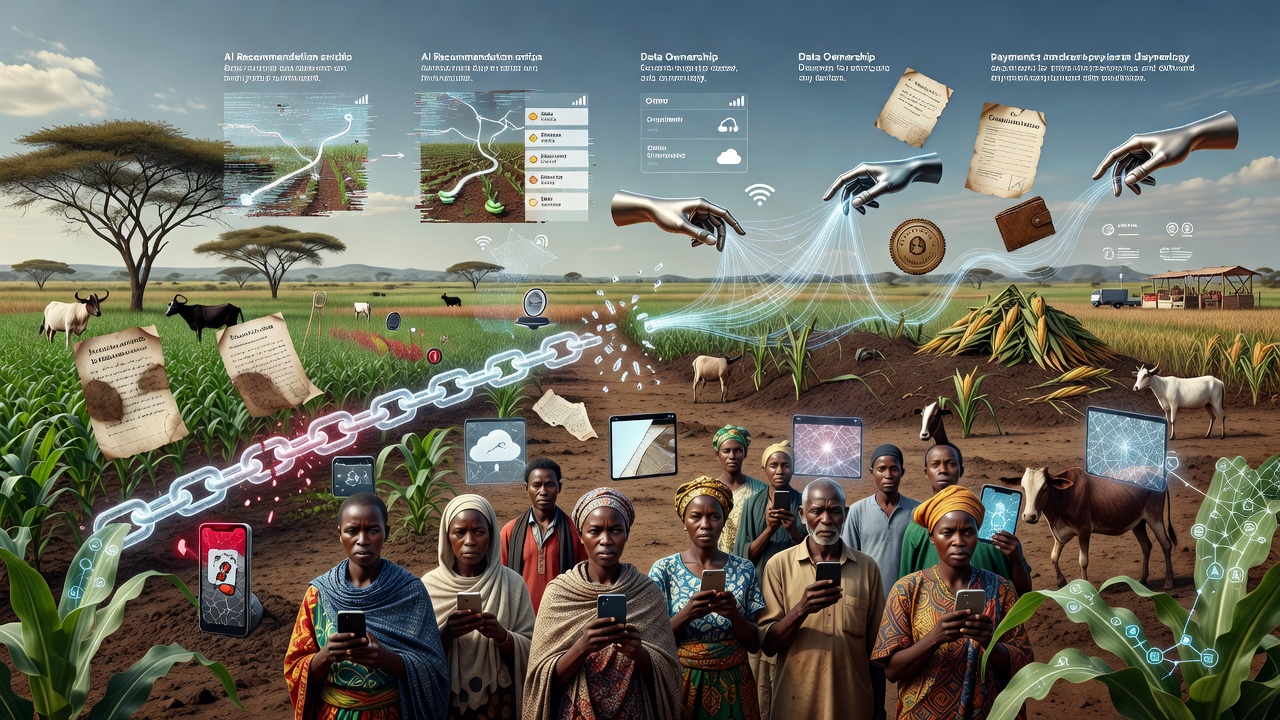
A framework paper in Frontiers in Sustainable Food Systems points to four obstacles that keep AI and blockchain tools from reaching many African smallholder farmers. The authors reviewed studies published between 2005 and 2025 and organized their findings around data reliability, decision support, data ownership and economic incentives. Their central message is that the technology alone will not solve these problems.
Blockchain Secures Records, Not Their Accuracy
Blockchain can create a tamper-resistant log of agricultural data, but it cannot confirm whether that data was correct when it was entered. A faulty soil sensor or a farm worker who records the wrong figure will produce a permanent, trusted record of bad information. Because AI systems generate recommendations from this input, errors can spread into planting, irrigation or pest-control advice.
Turning Data Into Decisions Requires Connectivity and Skills
Collecting information is only useful if farmers can act on it. The researchers identify limited internet access, weak mobile coverage and gaps in digital skills as major constraints. To address them, they recommend tools that work offline, interfaces in local languages, and direct farmer involvement in designing the systems they will use.
Who Controls Farm Data, and Who Benefits
Information about crop yields, soil conditions, pest outbreaks and market sales has commercial value. The study notes that farmers often have little control over how this data is used by others. Clear governance rules about ownership and consent are therefore part of the framework, not an afterthought.
Costs Without Clear Returns
The paper also flags economic incentives. Farmers may pay for devices, software and connectivity without seeing measurable gains such as lower input costs, fewer post-harvest losses or better access to markets. The proposed framework ties adoption to accountability and to economic benefits that farmers can actually measure. The paper is a framework and review rather than a field trial, so its recommendations describe what would need to work in practice rather than proven outcomes.