
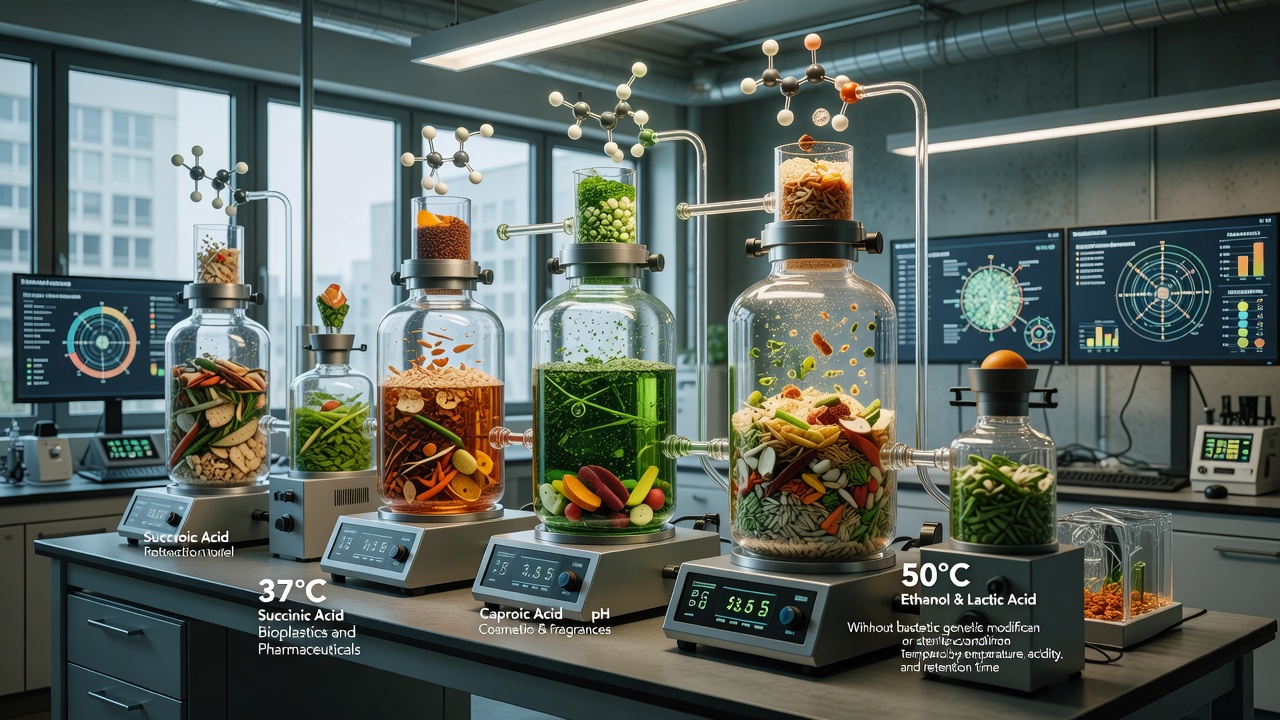
Vegetable trimmings, fruit peels, spent coffee grounds and stale bread from kitchen bins may one day supply chemicals used in pharmaceuticals, cosmetics and bioplastics. A study by researchers in Poland and the Netherlands, published in the journal Green Chemistry, found that adjusting fermentation conditions can steer which compounds the process produces. The work is laboratory research, not a commercial system, but it points to a more flexible way of turning municipal organic waste into useful feedstock.
How the fermentation process changes the output
The team, led by Professor Piotr Oleśkowicz-Popiel at the Poznań University of Technology with first author Hanna Prusak and partners at Wageningen University & Research, used a synthetic mix of vegetables, fruit, bread, rice and pasta to imitate typical household bio-waste. The mixture was fermented in laboratory reactors for 150 days while temperature, acidity and retention time were varied. The same bacterial community produced different chemicals depending on those settings, which the researchers say removes the need for genetic modification or costly sterile equipment.
Which chemicals the study produced
Succinic acid, used in bioplastics and pharmaceuticals, was produced most efficiently at 37°C with shorter fermentation times. Caproic acid, used in cosmetics and fragrance manufacturing, dominated under higher pH and longer retention times. At 50°C, the process mainly yielded ethanol and lactic acid. These results describe what happened under controlled conditions in the lab and do not show yields or costs at industrial scale.
Why the findings matter for waste and manufacturing
The chemical industry still relies heavily on petroleum-based feedstocks. The researchers argue that organic municipal waste could partly replace them and support a circular bioeconomy. Poland and other EU countries produce large volumes of municipal waste per person each year, and a significant share is organic material that is currently sent to biogas or composting facilities. A single adaptable bioreactor, the authors suggest, could eventually serve as a flexible biorefinery within city waste systems.
What remains unproven
The study used simulated waste rather than real household bins, which contain contaminants and varying compositions. Scaling the process, handling the economics and meeting regulatory standards for chemicals destined for pharmaceuticals or cosmetics are all open questions. For now, the research shows that fermentation conditions can direct which chemicals are made from food waste, and that practical deployment will require further testing.