
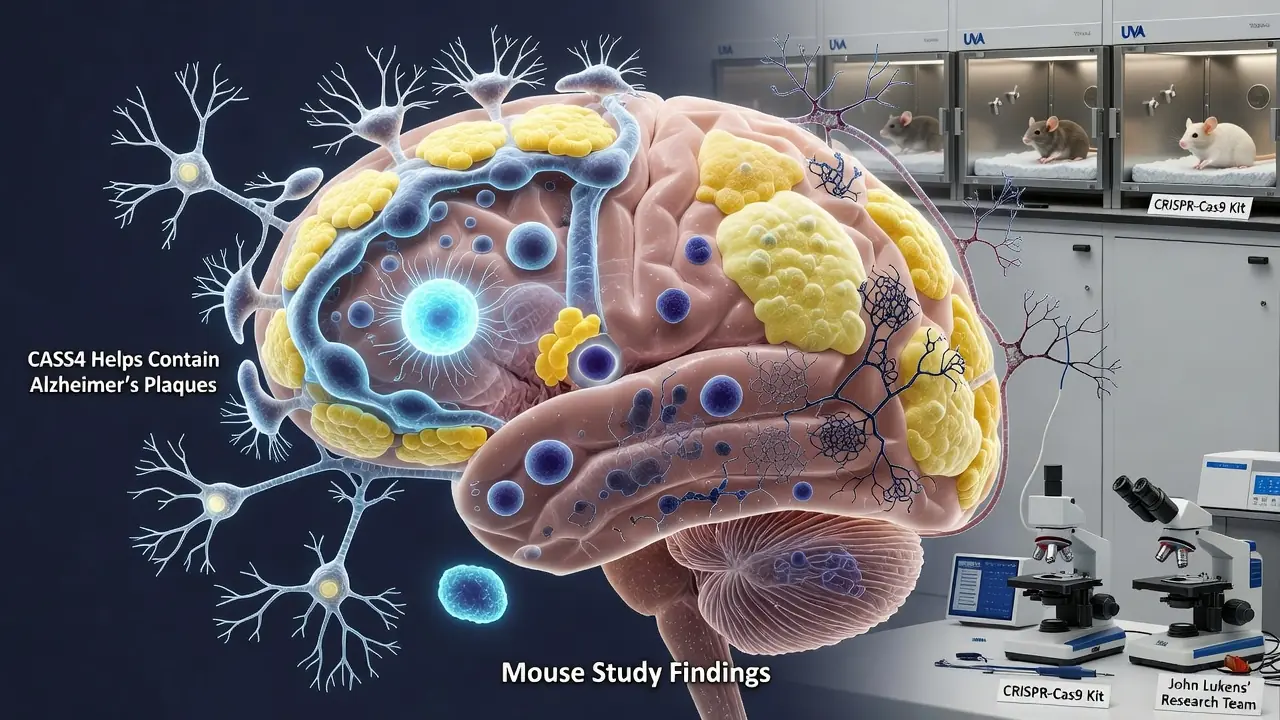
Researchers at the University of Virginia have found that a gene linked to Alzheimer's disease helps the brain's immune cells keep harmful protein buildup in check. Deleting the gene in laboratory mice worsened plaque spread, nerve cell damage and memory decline, which points to a possible new target for future therapies.
How the Brain's Cleanup Crew Responds to Plaques
Alzheimer's disease is associated with sticky amyloid-beta plaques that accumulate in the brain, along with twisted tangles of tau protein. Microglia, the brain's resident immune cells, are responsible for clearing out this kind of waste. When they work properly, they can form protective barriers around amyloid-beta plaques and compact them, limiting harm to nearby tissue.
What the Mouse Experiments Showed
The team, led by John Lukens, studied CASS4, a gene that earlier studies had identified as a major Alzheimer's risk factor but that scientists knew little about. The researchers found that CASS4 helps regulate microglia and their response to harmful plaques. When the gene was disrupted, microglia became less effective at containing amyloid-beta, plaques spread more aggressively, neurons were damaged and the mice declined cognitively more quickly. The loss of CASS4 also altered gene activity in ways the researchers said may matter for other neurodegenerative diseases, such as Parkinson's disease.
Why the Results Are Not Yet a Treatment
The findings come from mice, so it remains unclear whether targeting CASS4 would produce the same effects in people, particularly those in the early stages of the disease. The researchers plan to study whether CASS4 plays a role in Parkinson's disease, ALS and multiple sclerosis, and they are working with collaborators at UVA's Manning Institute on drugs that could eventually be tested in clinical trials.
Independent experts stress that preclinical results are an important early step but that many promising findings in animal models never become approved therapies. Any future treatment would still require a long path of development and testing before it could reach patients.